Camberwell Locksmith Service Team
Local locksmith team
2 Sep 2026 11 min read
You push your key into the lock, give it the usual twist — and nothing. It resists, grinds slightly, or refuses to turn past a certain point. It is a frustrating moment, and it happens on front doors all across Camberwell, from the Victorian terraces around Camberwell Grove to the converted flats near Denmark Hill station. Before you force anything or assume the worst, it helps to understand what is actually going on inside the lock — because the right response in the first thirty seconds can be the difference between a quick fix and an expensive repair.
A key that will not turn is one of the most common reasons our team at Camberwell Locksmith gets called out as an emergency locksmith London. The cause is almost always one of a handful of things: a worn or damaged key, a dirty or seized cylinder, a door that has dropped on its hinges, or a lock that has simply reached the end of its life. This guide walks you through what to check, what to try safely, and — just as importantly — when to stop and call a professional before you make things worse.
## Why a Key Stops Turning: The Most Common Causes
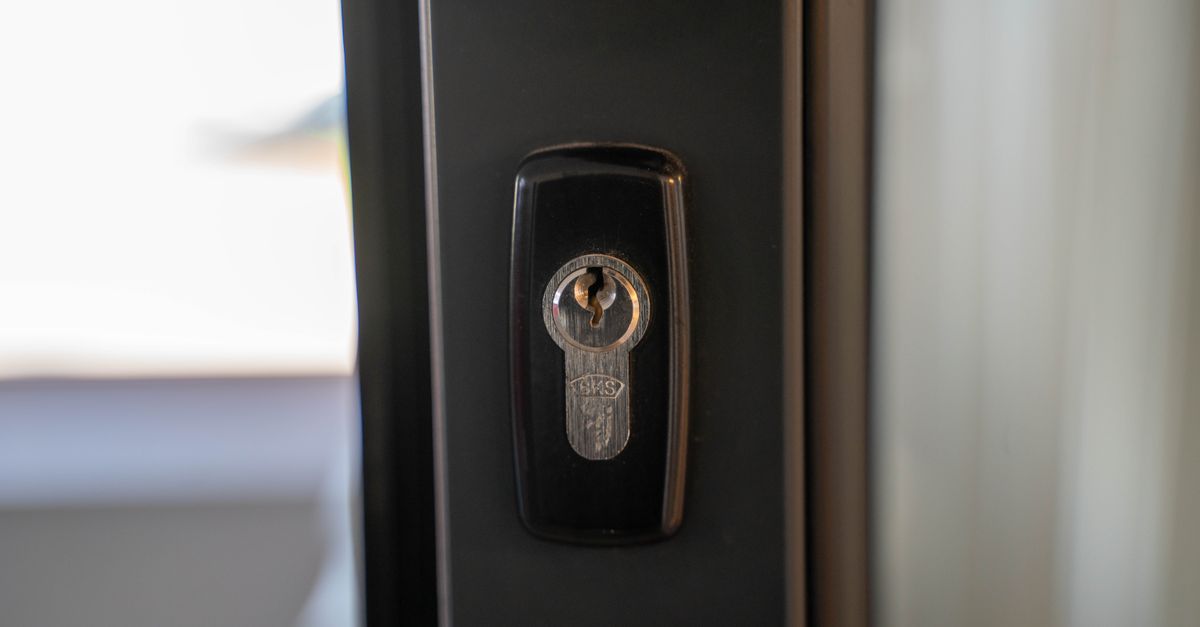
The inside of a lock cylinder is made up of a series of small spring-loaded pins or levers. When the correct key is inserted, it lifts each of those pins to exactly the right height, allowing the cylinder to rotate. If anything disrupts that alignment — a worn key, a dirty cylinder, a stiff mechanism, or a misaligned door — the cylinder simply will not turn. On older Camberwell properties with original Yale-type nightlatches or five-lever mortice deadlocks that have never been serviced, wear accumulates silently over years until one day the key barely works at all. On newer uPVC composite doors with euro cylinders and multipoint locking systems, the problem is more often a dropped door or a cylinder that has worked loose.
The most common culprits are: a key that has gradually bent or worn down at the tip; a cylinder clogged with grit, dust, or old lubricant residue that has hardened; a door that has sagged on its hinges so the locking bolt is no longer aligned with the keep in the frame; cold weather causing metal components to contract and bind; or, on uPVC doors, a multipoint lock mechanism whose internal gearbox has seized. In some cases the cylinder itself is simply worn beyond reliable use — a problem that becomes a security issue as well as a practical one.
## What to Try First — Gently and Safely
The key word here is gently. Forcing a key that is not turning is the fastest way to snap it inside the cylinder, which turns a minor inconvenience into a job that requires professional extraction. Start with the simplest checks. First, make sure you have the right key — it sounds obvious, but a slightly different key on a busy ring can look identical at a glance. Second, try lifting or pushing the door slightly while turning the key; if the door has dropped even a few millimetres, the bolt may be binding against the edge of the keep, and a small amount of upward pressure can relieve that stress enough to let the cylinder turn. Third, try turning the key in both directions — some multipoint locks on uPVC doors require a specific sequence, and a half-turn the wrong way can free a jammed gearbox.
If none of that works, a small amount of dry graphite lubricant — available from most hardware shops — applied to the key and gently worked into the cylinder can free a stiff mechanism. Do not use WD-40 or any oil-based product inside a lock cylinder; it attracts dust and grit and makes the problem significantly worse over time. If you do not have graphite lubricant to hand, do not attempt to improvise. At this point, if the key still will not turn after two or three calm attempts, stop. Continuing to force it risks snapping the key, damaging the cylinder, or causing the multipoint mechanism to jam in a way that is far more difficult and costly to resolve. This is the moment to call a 24 hour locksmith London rather than escalate the damage.
## Locked Out London: What to Do If You Cannot Get In At All
If the key has stopped working entirely and you are standing outside — perhaps late in the evening after work, or returning home on a cold night — the first step is to stay calm and check your options methodically. Do you have a spare key with a trusted neighbour, a family member, or your letting agent? Is there another entrance you can use safely and legitimately — a rear door you have a key for, or a communal entrance that is already open? If you live in a flat in a Camberwell block, your managing agent or housing association may have a keyholder on call for exactly this kind of situation.
If none of those options apply, what to do if locked out of house is straightforward: contact a professional locksmith rather than attempting to force entry yourself. Forcing a door — even your own — risks damage to the frame, the lock, and sometimes the door itself, and can create a security weakness that is expensive to put right. Our team is based locally and covers Camberwell and the surrounding SE5 and SE15 areas around the clock. We send a locksmith straight away and are usually with you in about 30 minutes. Where entry is needed, we work non-destructively wherever the lock and door type allows, so in most cases we can get you back inside without replacing anything at all. If you are in this situation right now, call us on 020 3757 5826 — we answer 24/7.
## When the Lock Itself Is the Problem: Repair, Cylinder Replacement, or Lock Change London
Sometimes the key-not-turning issue is a symptom of a lock that has reached the end of its reliable life. A five-lever mortice deadlock on a Camberwell Victorian terrace can last decades, but the internal levers do wear, and a key that is increasingly stiff to turn is an early warning sign worth acting on before you end up locked out entirely. Similarly, a euro cylinder on a uPVC or composite door that feels loose, spins freely, or has visible signs of wear or attempted attack should be replaced promptly — not just for convenience, but for security.
For door lock replacement London, the right approach depends on what you have. A worn or damaged euro cylinder can often be swapped out quickly for an upgraded anti-snap, TS007 3-star rated replacement — a worthwhile improvement given that cylinder-snapping is one of the most common methods used in break-ins across London. A seized multipoint lock mechanism may need repair or replacement of the gearbox rather than just the cylinder. For upvc door lock repair London, diagnosis matters: not every stiff multipoint lock needs a full mechanism replacement; sometimes adjustment of the door and hinges solves the problem entirely. Our experienced team will always assess what is actually needed and confirm an exact, up-front quote before any work begins — the price depends on the lock type, the parts required, and the time of day, and we make all of that clear before we start. If you have been thinking about a lock change London for an older property or following a change of tenancy, this is also a good moment to have that conversation.
## Prevention: Keeping Locks Working and Keeping Your Home Secure
Most lock problems are preventable with minimal effort. Applying a small amount of graphite lubricant to your key and cylinder once or twice a year keeps the mechanism moving freely. Checking your door hinges periodically — especially on heavier composite or solid timber doors — and tightening any loose screws prevents the gradual drop that causes bolts to bind against the frame. If your key is visibly bent, worn at the tip, or has started to feel stiffer than it used to, have it seen to before it fails entirely; a worn key accelerates wear inside the cylinder too.
On the security side, if your front door still has a basic euro cylinder without anti-snap protection, it is worth considering an upgrade. Insurers in London increasingly ask for BS3621-rated mortice deadlocks on timber doors, and TS007 3-star cylinders on uPVC and composite doors, as a condition of cover. A locked out London scenario is frustrating; a break-in through a snapped cylinder is far worse. Our team carries quality replacement cylinders and hardware and can advise on what your specific door and lock type needs. If you would like a security check or simply want a professional eye on a lock that has been giving you trouble, call 020 3757 5826 — we are available 24 hours a day, every day of the year including bank holidays.
## Locked Out of House: What to Do in an Emergency, Step by Step
To bring it all together: if your key will not turn, work through the steps in order. Check you have the right key. Try lifting or gently pushing the door while turning. Try the key in both directions. Apply dry graphite lubricant if you have it. After two or three calm attempts with no result, stop and call a professional. Do not attempt to force the door, do not try to tamper with the lock, and do not let a well-meaning friend attempt a home bypass — these approaches nearly always cause additional damage and can compromise your insurance position.
What to do when locked out of house, especially in the SE5 area, is simpler than most people expect: a single call to a local, experienced locksmith London team gets someone to you quickly, usually within about half an hour, and in most cases you will be back inside without the lock needing replacement at all. If the lock does need attention, we will tell you exactly what is required and why, confirm the cost before touching anything, and carry out the work cleanly and professionally. We are insured, our team is trained and experienced, and we have been helping residents across Camberwell, Peckham, Brixton, and the wider south London area get back through their doors at all hours. Call 020 3757 5826 whenever you need us.
Frequently asked questions
What should I do if my key snaps inside the lock?+
Stop trying to pull it out with pliers or tweezers — pushing the broken piece further in makes extraction harder. Call a professional locksmith as soon as possible. Skilled extraction tools can remove a snapped key from most cylinders without damaging the lock, meaning you may not need a full replacement. If the cylinder is damaged during extraction or was already worn, a replacement cylinder is a straightforward job. Call us on 020 3757 5826 and we can advise over the phone before coming out.
How much does it cost to get back into my house or change the lock?+
The final quote depends on several factors: the type of lock and door you have, what time of day or night you are calling, the parts needed if any, and travel to your location. We confirm an exact price with you on the phone before anyone comes out, so there are no surprises. What to do if you get locked out of your house is straightforward — call us, describe your door and lock, and we will give you a clear figure upfront.
Can I use WD-40 to free a stiff lock cylinder?+
It is best avoided. WD-40 and similar oil-based products provide short-term relief but leave a residue inside the cylinder that attracts dust and grit, making the problem worse over time and potentially seizing the mechanism more severely. Dry graphite lubricant, available from most hardware shops, is the correct product for lock cylinders. If the lock remains stiff after one or two careful applications, the cylinder itself is likely worn and should be assessed by a professional.
My uPVC door key turns but the door will not open — is that a different problem?+
Yes, almost certainly. If the key turns freely but the door stays shut, the fault is usually in the multipoint locking mechanism itself rather than the cylinder. The gearbox inside the door can seize, strip, or jam — especially on older uPVC doors — leaving the bolts engaged even when the cylinder has completed its rotation. This is a upvc door lock repair London job that requires the door to be opened and the internal mechanism inspected. In many cases the gearbox can be repaired or replaced without replacing the entire door. Call 020 3757 5826 and describe what the key is doing — we can usually diagnose the likely cause before we arrive.