Camberwell Locksmith Service Team
Local locksmith team
14 Oct 2026 11 min read
If your home insurer has ever asked whether your front door has a BS3621 lock, you are not alone. It is one of the most common questions homeowners and tenants in Camberwell receive when arranging or renewing their contents or buildings cover, and it can feel surprisingly confusing for something so fundamental to everyday security. This article explains exactly what the standard means, why insurers take it seriously, and what you can do today — without any specialist tools — to check whether your own door already meets it.
Whether you live in a Victorian terraced house off Camberwell Grove, a flat in a newer block near Denmark Hill, or a converted maisonette anywhere across SE5, the same insurance condition almost certainly applies to your front door. Getting it right protects your belongings and keeps your policy valid — and if your locks do not currently meet the standard, our team at Camberwell Locksmith can sort that for you quickly and without fuss.
What BS3621 Actually Means — and Why It Matters for Your Policy
BS3621 is a British Standard for thief-resistant locks. The number refers to a specification published by the British Standards Institution that sets out the minimum performance requirements a lock must meet to be considered genuinely resistant to common break-in methods. To earn the kitemark, a lock must withstand picking, drilling, cutting, and direct physical attack for defined periods under test conditions. It is not a marketing label — it is a tested and independently verified performance threshold. You will usually find the BS3621 kitemark stamped on the faceplate or the body of a qualifying lock, though we will come back to exactly how to check for it in a moment.
Insurers care about BS3621 because it gives them a consistent, objective way to assess the security of your home. Without it, two properties described as having 'a lock on the front door' might be worlds apart in terms of actual resistance to forced entry. When an insurer writes BS3621 into your policy conditions — usually under the heading of minimum security requirements — they are effectively saying that any claim involving a break-in through a non-compliant door may be rejected or reduced. That is not a scare tactic; it is a clause that has caught out real policyholders who assumed their existing locks were sufficient. Checking now costs nothing.
The Two Most Common Lock Set-Ups on London Front Doors
On a traditional timber front door — common throughout the older housing stock in Camberwell, Peckham, and across much of inner south London — you will typically find two locks working in combination. At eye level there is usually a Yale-type nightlatch: a spring-loaded latch that catches automatically when the door closes. Below it, roughly a third of the way up from the bottom, sits a 5-lever mortice deadlock recessed into the edge of the door. It is this lower lock that your insurer almost certainly means when they refer to BS3621. A standard 5-lever mortice deadlock that carries the BS3621 kitemark is the most widely accepted qualifying lock for timber doors, and many homes in SE5 already have one — the question is whether it is the correct standard or an older, non-kitemarks version.
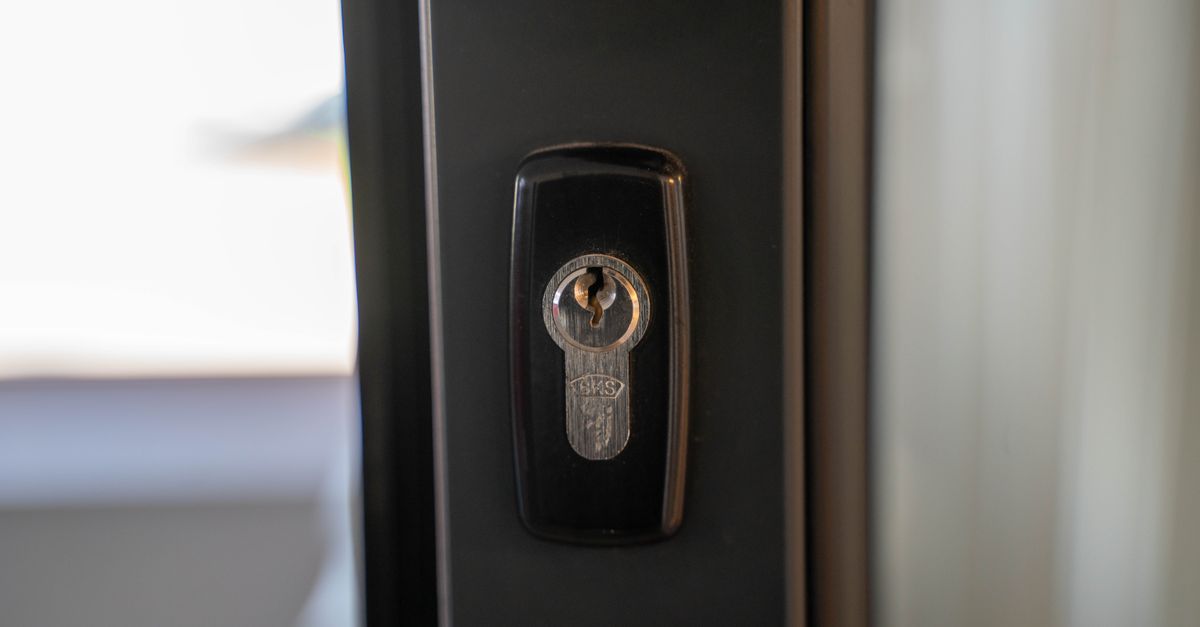
On a uPVC or composite door — increasingly common on newer builds and upgraded period properties alike — the set-up is different. These doors use a multipoint locking mechanism: a single handle or key operation that simultaneously throws multiple hooks or bolts at different points around the door frame. The lock cylinder (the barrel that your key turns) sits in the centre of the mechanism. Here, the focus for insurance compliance tends to shift to the quality and anti-snap rating of that cylinder rather than a traditional mortice lock. Anti-snap cylinders, often rated to TS007 3-star or SS312 Diamond standards, resist the technique known as cylinder snapping — a quick and unfortunately straightforward method that became widespread and that a standard euro cylinder offers almost no protection against. If you have a uPVC door, checking the cylinder is at least as important as checking any lock label.
How to Check Your Front Door Lock Right Now — a Practical Walk-Through
Start with your mortice deadlock. Close your front door and turn the key to throw the bolt, then kneel or crouch so the lock body is at eye level. Look at the metal plate on the edge of the door — the faceplate — and also at the visible face of the lock body if your door has a keyhole cover. You are looking for a kitemark symbol (a stylised letter K with a tick) alongside the number 3621 or the text BS3621. It may be small and partially obscured by paint on older doors, so use the torch on your mobile to get a clear look. If you find it, your mortice deadlock is compliant. If you find only a brand name, a patent number, or no marking at all, there is a reasonable chance it does not meet the standard — especially if the lock has been in place since the 1980s or 1990s.
For a uPVC or composite door, examine the cylinder — the oval or round barrel visible on both sides of the door. Look for the TS007 3-star rating or the Sold Secure SS312 Diamond mark, either stamped on the cylinder itself or printed on its packaging if you have it. A cylinder with no visible security marking and no anti-snap groove visible on the outside is worth investigating further. It is also worth noting whether the cylinder protrudes more than 3mm beyond the door furniture, since a protruding cylinder is significantly easier to snap. If you are unsure at any point, our locksmith London team is happy to come out and assess your door — we work across Camberwell and the surrounding SE postcodes seven days a week, including evenings and bank holidays. Call 020 3757 5826 and we can usually be with you in about 30 minutes.
Lock Change London: When Upgrading or Replacing Is the Right Call
If your check reveals that your current locks do not carry the BS3621 kitemark, or that your uPVC cylinder shows no anti-snap protection, the practical next step is a door lock replacement. This is a straightforward job for an experienced locksmith: on a timber door, we remove the old mortice lock and fit a new BS3621-kitemarks 5-lever mortice deadlock into the same mortice pocket, usually with no damage to the door or frame. On a uPVC or composite door, we measure and replace the euro cylinder with an anti-snap, anti-pick, anti-drill alternative rated to TS007 3-star. In both cases you end up with locks your insurer will accept and that genuinely improve your protection against the most common break-in methods used in London today.
There are other situations where a lock change is worth considering beyond pure insurance compliance. If you have recently moved into a property in Camberwell or anywhere else in London, you have no way of knowing how many keys were cut from the previous locks or who holds them — letting agents, previous tenants, maintenance contractors, and former partners are all possibilities. Changing the lock or the cylinder is a simple, permanent solution. The same applies after a burglary or attempted break-in, after losing a key, or after a relationship breakdown. The cost of a lock change depends on factors including the type of door, the lock or cylinder specification needed, the time of day, and travel distance — we confirm an exact, agreed price before any work begins, so there are no surprises.
Locked Out London: What to Do If You Cannot Get In — and When to Call Us
A lockout is a stressful situation, and it is worth running through a few quick checks before calling anyone. First, try all other entry points: a rear door, a window that may be on the latch, or a French door into the garden. If you live in a flat, let your building manager or caretaker know — they may hold a spare key or have a contact for the communal entrance. Check whether a family member, trusted neighbour, or friend holds a spare key to your property. If any of those options work, brilliant. If not — if you are genuinely locked out with no alternative entry — that is when you need a qualified locksmith.
When you do call a professional, the locksmith should be able to open your door without causing unnecessary damage in most standard lockout scenarios, then advise you on whether the lock needs to be changed afterwards. Legitimate locksmiths will also ask you to verify that you are entitled to access the property before carrying out any work — this is standard practice and not something to be put off by. If you are locked out anywhere in Camberwell, Peckham, Brixton, or the wider south London area, our 24 hour locksmith London team is on call day and night, including weekends and bank holidays. We send a locksmith straight away when you call 020 3757 5826 — the same number, any time, any day.
A Note for Tenants and Landlords in Camberwell
If you rent your home, the question of who is responsible for ensuring the locks meet your insurer's requirements can be a little complicated. As a general rule, the structure and fabric of a property — including its locks — are the landlord's responsibility. However, contents insurance policies taken out by tenants sometimes include security conditions that the tenant may need to flag to their letting agent or landlord. If you are a tenant in Camberwell and your insurer has asked about BS3621 compliance, the right first step is to write to your landlord or letting agent explaining the requirement. Many landlords in London are happy to arrange an upgrade promptly, since it also improves the security of their investment.
For landlords managing one or more properties in SE5 or across inner south London, ensuring your properties have compliant locks is both a legal and practical consideration. Tenants expect a secure home, and a break-in that leads to a rejected insurance claim can damage your relationship with tenants significantly. We work regularly with private landlords and letting agents across Camberwell and can carry out security assessments and lock upgrades at a time that suits both landlord and tenant. Our upvc door lock repair London service also covers multipoint mechanism failures and cylinder replacements on composite doors, which are increasingly common in newer rental properties across the area.
Frequently asked questions
How do I know if my lock already meets BS3621 without calling a locksmith?+
The quickest method is a visual check of the faceplate on the edge of your door. Look for the BSI kitemark — a stylised K with a tick — followed by the number 3621. It may be small or partially obscured by old paint, so a torch helps. On a uPVC or composite door, check the cylinder itself for a TS007 3-star or SS312 Diamond mark. If you cannot find any marking, your lock may predate the standard or simply not meet it, and it is worth having a professional take a look to confirm.
Will my insurer actually refuse a claim if I do not have a BS3621 lock?+
It depends on the precise wording of your policy, but many home insurance policies in the UK include a minimum security clause that specifies BS3621 or equivalent. If a break-in occurs and your locks are found not to meet that clause, your insurer is entitled to reduce or decline the claim. It is well worth reading your policy documents or calling your insurer to confirm exactly what they require before assuming your current locks are acceptable.
Can I replace just the cylinder on my uPVC door, or does the whole lock need to come out?+
In most cases, only the cylinder needs to be replaced. On a standard uPVC or composite door with a multipoint mechanism, the cylinder is a removable component — your locksmith will measure the existing one, source a matching anti-snap replacement of the correct size, and fit it in a relatively short visit. The multipoint mechanism itself only needs attention if it has developed a fault, such as a hook or bolt that no longer engages properly with the frame. During any cylinder replacement, a good locksmith will also check the mechanism is functioning correctly as a matter of course.
How quickly can Camberwell Locksmith reach me if I am locked out or need an emergency lock change?+
We are a 24 hour locksmith London service operating across Camberwell and the surrounding SE and south London postcodes every day of the year, including bank holidays. When you call 020 3757 5826, we send a locksmith straight away and are usually with you in around 30 minutes, though exact travel time varies depending on where we are coming from and traffic conditions at the time. We will give you a confirmed, up-front price on the phone before anyone sets off, so you know exactly where you stand before we arrive.